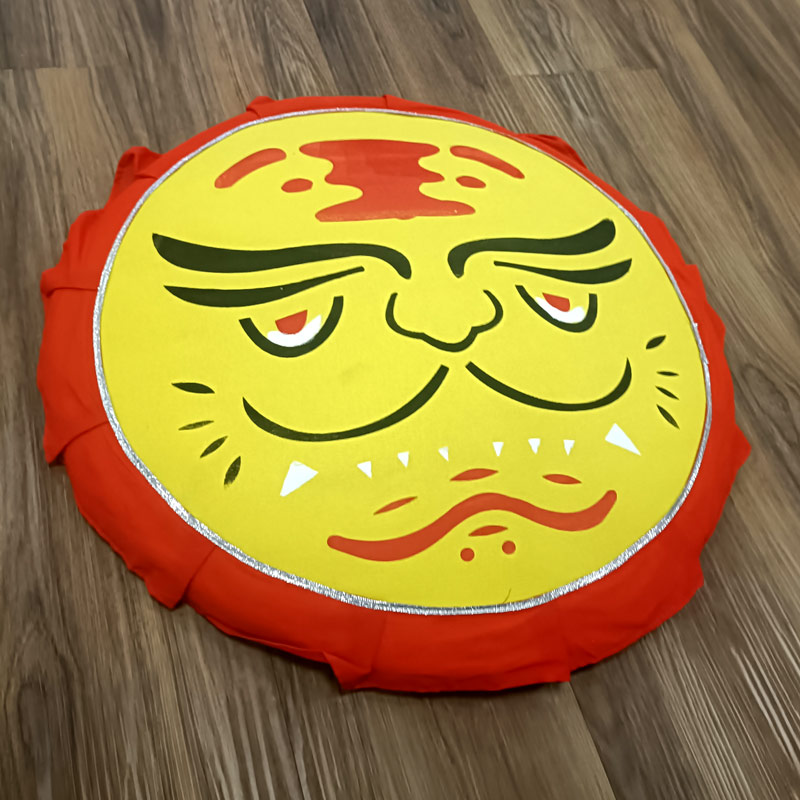
Tiger Head Shield
| Qty: | Add to cart |
-Diameter - 52cm
-Weight - 660g
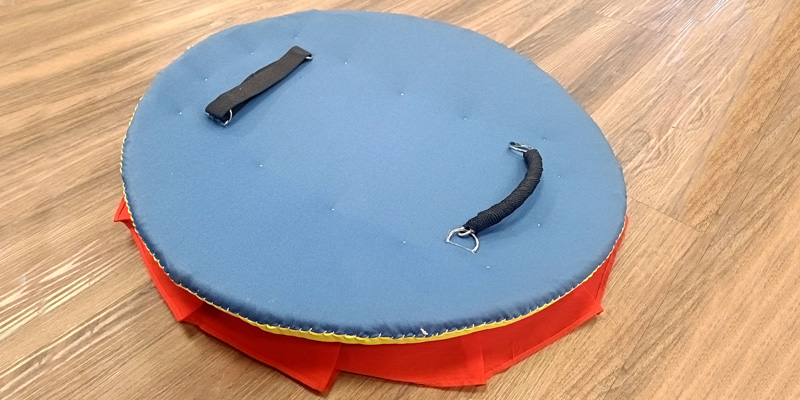
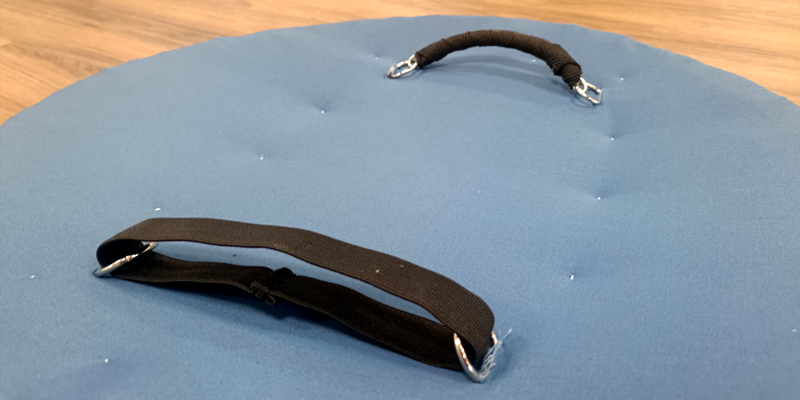
-Elasticized arm strap
-Padded hand-hold
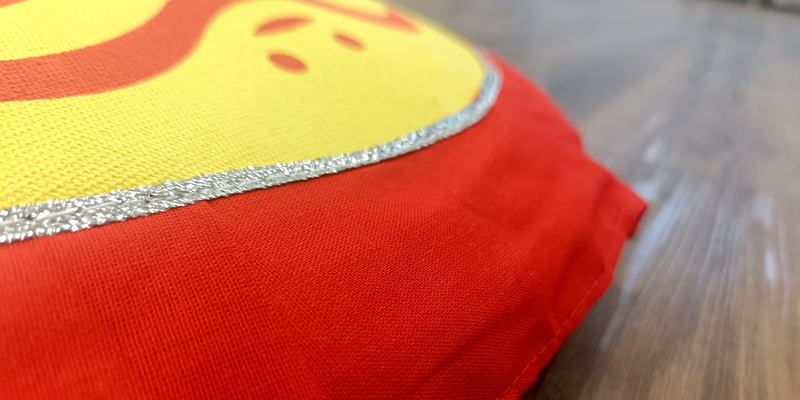
-Made of high density foam with a bamboo frame
-Perfectly designed for performance
-Traditional Tiger Head design
More About Tiger Head Shields
Dating back to the Three Kingdoms Period, tiger shields were traditionally made of rattan, a type of climbing palm that grows throughout Southern China. The vines have no grain, which gives them shock-absorbent qualities. When oiled and left to dry, they form a hardy material, rumored to stop bullets when rattan encountered firearms in later periods but this seems unlikely. That said, they were definitely successful in stopping blades hit their target due to the complex and dense weave. The construction also meant that the shields were both lightweight and resilient, ideal for unburdening the user through hilly and wet terrain.
Unfortunately, most archaeological and cultural evidence of ancient Chinese shields has been lost, largely because they were organic and broke down over time.
Another reason for the lack of shields in historical archives is that they did not support the “heroic” culture preferred by so many stories and artists; it was seen as far more noble to be depicted with a guandao or sword than with a shield.
During the Qing dynasty, rattan shields were often painted with a bold tiger face, sometimes marked with the character wáng (王), meaning “king”, on the forehead. Foreign observers sometimes mistook these designs for frightening demon faces, but the tiger was more likely a protective symbol. In Mandarin, the word for tiger, hǔ (虎), sounds similar to the word for protection, hù (護). Tigers were long believed to ward off evil, appearing on doors and even children’s hats, so the tiger face on these shields was likely meant to reassure Qing soldiers of the shield’s protective power.
Today, the rattan shield remains popular in many forms of Kung Fu, particularly southern styles. In modern training we see it often in form work, demonstrations, cultural performances and duals. Practitioners use the shield to develop rooted footwork, low stances, turning power and close-range coordination, keeping the body covered while the weapon hand cuts, chops or thrusts from behind the shield. Forms often employ deep, low-to-the-ground stances to keep as much of the body’s profile behind the shield as possible; from here, one can cut at the legs and upward at the body from irregular angles. In Wushu, the shield is also valued for its visual impact, helping performers combine defensive shapes with fast directional changes, dramatic drops and weapon flourishes. Although the shield is often imagined with a sword and spear combination, it is now more commonly seen paired with a broadsword or butterfly swords.